


Hey there! I'm a supplier of PE coated cup paper, and let me tell you, manufacturing this stuff comes with its fair share of challenges. In this blog, I'll break down some of the major hurdles we face in the production process.
1. Raw Material Quality and Availability
First off, the quality and availability of raw materials are huge factors. The base paper for PE coated cup paper needs to have the right strength, smoothness, and absorbency. If the base paper is too weak, it won't hold up well when filled with hot or cold beverages. On the other hand, if it's too absorbent, the PE coating might not adhere properly, leading to issues like peeling or leaking.
Finding a reliable source for high - quality base paper can be a challenge. Sometimes, there are shortages in the market, which can disrupt our production schedule. And let's not forget about the polyethylene (PE) resin used for coating. The quality of the PE resin affects the barrier properties of the coated paper. Low - quality resin might not provide sufficient protection against liquids, making the cups prone to leakage.
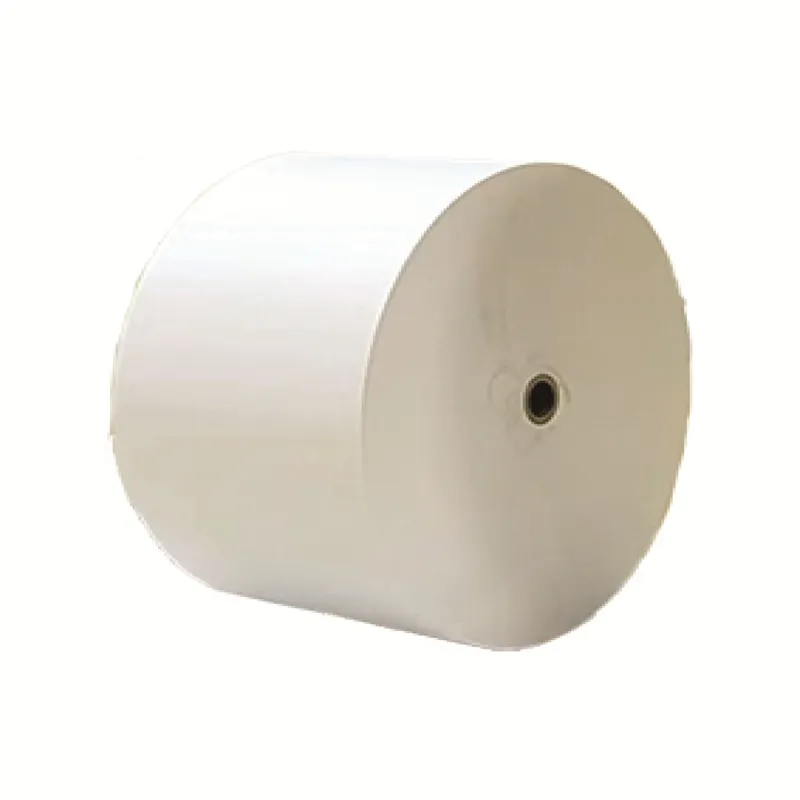
We constantly have to work with our suppliers to ensure a steady supply of top - notch raw materials. It's a bit like a balancing act, making sure we have enough stock without overstocking and tying up too much capital. You can check out our Polycoated Paper Roll which is made from carefully selected raw materials to meet high - quality standards.
2. Coating Process Complexity
The coating process itself is a complex operation. There are different methods of applying the PE coating, such as extrusion coating and laminating. Each method has its own set of challenges.
Extrusion coating involves melting the PE resin and then extruding it onto the base paper. The temperature, pressure, and speed of the extrusion process need to be precisely controlled. If the temperature is too high, the paper might get damaged, and if it's too low, the coating might not bond properly. The pressure also affects the thickness and uniformity of the coating. A non - uniform coating can lead to weak spots in the cup, increasing the risk of leakage.
Laminating, on the other hand, requires proper alignment of the PE film and the base paper. Any misalignment during the lamination process can result in wrinkles or bubbles in the coated paper. These defects not only affect the appearance of the cups but also their functionality.
We've spent a lot of time and resources optimizing our coating processes. It's an ongoing process of fine - tuning and testing to ensure that each roll of Polycoated Cupstock we produce meets our strict quality criteria.
3. Environmental and Regulatory Compliance
In today's world, environmental concerns are at the forefront of every industry, and ours is no exception. PE coated cup paper is not the most environmentally friendly product due to the presence of plastic (PE). There's a growing demand for more sustainable alternatives, and we're constantly under pressure to find ways to reduce our environmental impact.
We have to comply with various environmental regulations regarding waste management, emissions, and the use of chemicals. For example, the production process might generate some waste materials, and we need to ensure that they are disposed of properly. There are also regulations related to the emissions of volatile organic compounds (VOCs) during the coating process.
To address these challenges, we're investing in research and development to find more sustainable coating materials and production methods. We're also looking into ways to recycle the PE coated cup paper at the end of its life cycle. Our PE Coated Cupstock Paper is produced with an eye on environmental compliance, although we know there's still a long way to go.
4. Quality Control
Maintaining consistent quality is crucial in the manufacturing of PE coated cup paper. We have to perform a variety of quality control checks at different stages of the production process.
For the base paper, we check for properties like grammage, thickness, and strength. During the coating process, we monitor the coating thickness, adhesion, and barrier properties. After the coating is applied, we test the coated paper for things like water resistance, grease resistance, and heat resistance.
Even a small deviation in quality can lead to a large number of defective products. For example, if the water resistance of the coated paper is not up to par, the cups might start leaking when filled with a hot beverage. This can damage our reputation and lead to customer dissatisfaction.
We have a dedicated quality control team that uses advanced testing equipment to ensure that every roll of paper meets our quality standards. But it's still a challenge to catch every potential defect, especially when we're producing large volumes of paper.
5. Market Competition
The market for PE coated cup paper is highly competitive. There are many suppliers out there, all vying for the same customers. To stay ahead, we need to offer high - quality products at competitive prices.
Some competitors might cut corners on quality to offer lower prices. This can make it difficult for us to convince customers that our higher - priced products are worth the investment. We have to constantly work on improving our production efficiency to reduce costs without sacrificing quality.
We also need to keep up with the latest market trends and customer demands. For example, customers might be looking for cups with unique designs or features. We need to be able to adapt quickly to these changing demands to stay relevant in the market.

Conclusion
Manufacturing PE coated cup paper is no easy feat. From dealing with raw material issues to complex coating processes, environmental compliance, quality control, and market competition, there are many challenges along the way. But despite these challenges, we're committed to producing high - quality products that meet the needs of our customers.
If you're in the market for PE coated cup paper, we'd love to talk to you. Whether you need a small order for a local café or a large order for a big - scale food service business, we can provide you with the right solution. Contact us to start a conversation about your specific requirements and let's see how we can work together.
References
- "Paper and Paperboard Coating Technology" by P. A. Smith
- Industry reports on the packaging and paper manufacturing sector


